What to See in Granada - Top 20 Sights and Attractions you Can't Miss


Enjoy a special day at the Alhambra with a guided tour
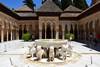 Alhambra and Nasrid Palaces: discover the wonders of the Alhambra with this all-inclusive tour: the Nasrid Palaces, the Generalife, the Alcazaba, and more.
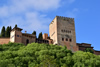 Alhambra + Albaicín + Sacromonte: a perfect combination of a guided tour of the Alhambra in the morning and a guided tour of the Albaicin and Sacromonte in the afternoon.
Your trip to Granada would be incomplete without visiting these places, which, in our opinion, show what makes this city special. Here, you'll find essential information and practical tips about each of these places. Choose the ones that interest you the most.
The sights are not listed in any specific order, so feel free to explore them as you like, but visiting the Alhambra first is recommended. We suggest staying in Granada for at least three days to fully experience all that the city and province have to offer.

This map helps you locate each of these monuments, museums, sites, and neighborhoods.

One thing to keep in mind when deciding what to see in Granada is that Granada is not just a city but also a beautiful mix of mountains, coastline, and charming villages. A visit to the Alpujarra region, Sierra Nevada mountains, and the Tropical Coast of Granada is highly recommended.
The Alhambra and the Generalife
 The monumental complex of Alhambra includes the Alcazaba (military part),
the Generalife (gardens), and the Nasrid Palaces,
with its most famous and most photographed part being the
Court of the Lions.
The monumental complex of Alhambra includes the Alcazaba (military part),
the Generalife (gardens), and the Nasrid Palaces,
with its most famous and most photographed part being the
Court of the Lions.
It's an ideal place for capturing the most romantic photos with your partner.
Numerous celebrities, politicians, kings, intellectuals, and various illustrious personalities have posed in this monument.
 Arguably, the most original photo was taken when the New Zealand rugby team, the 'All Blacks',
performed their famous 'haka' in front of the Patio de los Leones.
Arguably, the most original photo was taken when the New Zealand rugby team, the 'All Blacks',
performed their famous 'haka' in front of the Patio de los Leones.
The Generalife Gardens is another representative place in the Nasrid monument.
In particular, the Patio de la Acequia, has inspired numerous celebrities whose images have been widely spread throughout the world.
Sharon Corr, from the Irish group 'The Corrs', chose the Alhambra and the Generalife for her first music video 'Dream of You' to launch her solo career.
Make your experience in Granada even more complete and memorable
10 Best Caves and Venues for Flamenco in Granada: immerse yourself in the passion of flamenco and live unique experiences in the best tablaos in the city.
Authentic Arab Baths and Relaxing Massage: enjoy a deep relaxation experience with an exclusive massage in a traditional setting.
The Alhambra - some tips for your visit:
- When purchasing tickets, you need to select a specific time slot for visiting the Nasrid Palaces. Being late might result in not being allowed entry.
- The General Entrance to the Alhambra is self-guided. If you wish to delve deeper into its history and legends, you can book this Alhambra Guided Tour.
- There is also a Alhambra + Albaicín + Sacromonte Tour that includes the two most beautiful districts of Granada.
The Most Iconic Monuments and Buildings

Cathedral and Royal Chapel
The Cathedral of Granada
 If the Alhambra represents the magnificence of the Nasrid Granada, the monumental Cathedral of Granada symbolizes the triumph of the
Catholic Monarchs, who conquered it in 1492, ultimately uniting Spain under one banner.
If the Alhambra represents the magnificence of the Nasrid Granada, the monumental Cathedral of Granada symbolizes the triumph of the
Catholic Monarchs, who conquered it in 1492, ultimately uniting Spain under one banner.
The Cathedral of Granada is a jewel of the Spanish Renaissance, standing out in many aspects and adorned with works of art by the finest artists of the time.
The Royal Chapel
 Granada held such significance for the Catholic Monarchs that they decided to be buried here and lie in all their greatness in the
Royal Chapel.
Granada held such significance for the Catholic Monarchs that they decided to be buried here and lie in all their greatness in the
Royal Chapel.
Even though the Royal Chapel is adjacent to the Cathedral building, a separate ticket is required to visit the chapel.
During Michelle Obama's brief visit to Granada on her Spanish vacation in 2010, this was one of the places she didn't want to miss.
Cathedral and Royal Chapel - some tips for your visit:
- You can buy tickets to the Cathedral and the Royal Chapel directly at the ticket office; there's no need to book in advance.
- If you wish to delve deeper into the history and architecture of these emblematic monuments, you can purchase a guided tour: Granada Cathedral and Royal Chapel Tour.
- These sights are among our top 10 recommendations.
Cartuja Monastery: Gothic, Renaissance, and Baroque
 Since 1492, when the Catholic Monarchs finally entered Granada
and settled in the Alhambra, the city began to rapidly transform.
Since 1492, when the Catholic Monarchs finally entered Granada
and settled in the Alhambra, the city began to rapidly transform.
Considerable funds were invested in constructing large churches, convents, and monasteries, as well as in inviting various religious orders to promote Catholicism among the population.
In a few years, the city of a thousand mosques became the city of a thousand churches, with one of the most prominent undoubtedly being the Cartuja Monastery.
 It is believed that the first Carthusian monks arrived in Granada in 1514 and resumed the works
of the Monastery that had begun in 1506.
It is believed that the first Carthusian monks arrived in Granada in 1514 and resumed the works
of the Monastery that had begun in 1506.
It took three centuries to complete this magnificent work of art, exhibiting wonders of late Gothic, Renaissance, and Spanish Baroque.
It's a quiet and enjoyable experience, with a calm atmosphere that allows you to fully appreciate the incredible effort invested in this iconic site.
The Cartuja Monastery is not situated in the center, but it's worth the 20-minute ride on the city bus.
Cartuja Monastery - some tips for your visit:
- There is a gift shop next to the free parking lot at the entrance, where you will find nice souvenirs, water, and cold drinks.
- There are no guided tours, but the tourist route is signposted, and the audio guides can be downloaded using a QR code. It's free.
- This sight is among our top 10 recommendations.
San Jerónimo Monastery: Spain's Renaissance Jewel
 The Monastery of San Jerónimo
is a jewel of the Spanish Renaissance and one of the first monasteries constructed
following the Christian conquest of the city.
The Monastery of San Jerónimo
is a jewel of the Spanish Renaissance and one of the first monasteries constructed
following the Christian conquest of the city.
Founded in the 16th century, it stands out for its impressive church, which boasts a richly decorated main altar, and a cloister adorned with architectural details that beautifully illustrate the transition between the Gothic and Renaissance styles. styles.
This is undoubtedly a site of great historical and artistic significance, reflecting the splendor of a pivotal era in Granada's history.
The monastery continues to function as a living religious site, housing a community of nuns.
San Jerónimo Monastery - some tips for your visit:
- It is centrally located, so there is no need for a bus.
- After the Alhambra, this is our next top recommendation, similar to the Cartuja, it's perhaps even more captivating than the Cathedral.
The Bañuelo: the Best-Preserved Arab Baths
 At the foot of the Albaicín and overlooking the hill of the the Alhambra lies
one of the best-preserved Arab baths in the Iberian Peninsula.
At the foot of the Albaicín and overlooking the hill of the the Alhambra lies
one of the best-preserved Arab baths in the Iberian Peninsula.
Built in the 11th century during the Zirid rule, this hammam is notable for its simple yet elegant architecture.
Used for both personal hygiene and socializing, the Bañuelo is a captivating relic of daily life in Islamic Granada and a remarkable example of Andalusian cultural heritage.
Some tips for your visit:
- There are no informational signs to guide you, so it's a good idea to read up on the bath before your visit.
- The baths consist of just a few rooms, so you can easily explore the entire site in about 10 minutes.
- It's free on sundays for EU citizens.
Royal Hospital: Commissioned by Queen Isabela
 Founded by the Catholic Monarchs in 1504, this majestic historic building blends
Gothic, Renaissance and Mudejar elements.
Founded by the Catholic Monarchs in 1504, this majestic historic building blends
Gothic, Renaissance and Mudejar elements.
Originally designed as a hospital for the poor, convalescents, and pilgrims, its architecture is centered around four courtyards, highlighted by an impressive central cloister and a chapel dedicated to Saint John of God.
Currently, Royal Hospital houses the headquarters of the University of Granada's Rectorate and serves as an important center for the conservation of documents and bibliographic materials.
Royal Hospital - some tips for your visit:
- Just next door are the lovely Triunfo Gardens—don't miss the chance to explore them too.
- Puerta Elvira is just 300 meters away, another recommended site. Visit both to make the most of your time.
- An interesting landmark, but if you're only in Granada for a day, save it for your next visit.
Puerta Elvira
 The Puerta de Elvira is one of the most
significant historical sites to visit in Granada.
The Puerta de Elvira is one of the most
significant historical sites to visit in Granada.
Built in the 11th century during the Zirid period, this impressive stone gate served as the main entrance to the city and was linked to the ancient wall that surrounded Granada.
With its horseshoe arch and formidable structure, the Puerta de Elvira has stood as a testament to centuries of the city's history, preserving the charm of medieval defensive architecture.
Puerta Elvira - some tips for your visit:
- It's located where famous Elvira Street finishes, packed with lively tapas bars.
- About 1km from the main attractions—if you're short on time, save it for your next visit.
Basilica de las Angustias
 The Basilica of Our Lady of Angustias
is one of the city's most cherished landmarks.
The Basilica of Our Lady of Angustias
is one of the city's most cherished landmarks.
Built in the 17th century, the basilica is renowned for its striking baroque façade and its opulent interior, adorned with frescoes, sculptures, and a magnificent main altarpiece that houses the image of the Virgin of Angustias, patron saint of Granada.
This place of worship is not only a significant religious center but also a cultural and artistic sights, drawing both faithful and tourists, particularly in September during the celebrations in honor of the patron saint.
Basilica of Las Angustias - some tips for your visit:
- The Basílica is mainly open on weekdays for prayers; however, visits are permitted in the morning from 11:30 to 13:00 and in the afternoon from 18:00 to 19:30.
- Please, be respectful during your visit.
Historic Neighborhoods
The Albaicin: Granada's Oldest Neighborhood
 One of the top things to consider when wondering what to see in Granada is the picturesque neighbourhood of the Albaicin.
The Zirid dynasty established its court in the the Albaicin neighborhood during the 10th century, predating the construction of the the Alhambra.
It is the oldest neighbourhood of Granada, situated on a hill facing the Alhambra, far from the medina.
Appreciate its marvelous Spanish-Muslim architecture from the medieval period, a defining feature that led to its inclusion in the World Heritage Site. For this reason alone, the Albaicin is an essential part of Granada.
 Explore its many wells, Arab and Moorish houses, convents, churches, and various other intriguing places.
The visit can span a whole day, but in 3-5 hours you can see the most important places.
The Viewpoints of the Albaicín
Here, you'll discover famous viewpoints like San Nicolás, offering spectacular views of the Alhambra.This spot was admired by U.S. President Bill Clinton and his wife Hillary Clinton during an official visit to our country in 1997 while enjoying the beautiful sunset.
The Albaicin - some tips for your visit:
- Comfortable walking shoes are recommended due to the numerous slopes and cobbled streets.
- There are numerous tapas bars in the neighborhood, making it a good idea to pause and enjoy a cold drink.
- The best way to explore the Albaicin, its beauty, and history, is by joining: Albaicin and Sacromonte Guided Tour.
Sacromonte Neighborhood and its Flamenco Tradition
 The Sacromonte neighborhood, one of the oldest and most picturesque
in Granada, is a must on our top 10 Granada list.
The Sacromonte neighborhood, one of the oldest and most picturesque
in Granada, is a must on our top 10 Granada list.
As you ascend the Cuesta del Chapiz and turn right at the small square where the sculpture of the famous gypsy Chorrojumo is situated, you'll enter the neighborhood through the Camino del Sacromonte.
Along the way, you'll enjoy wonderful views of the Alhambra and the Darro River Valley as you enter a territory that is legendary for many reasons.
 You'll soon notice the uniqueness of their homes, carved into the mountain and adorned with white lime and colorful pots.
Its zambras became world-famous among the romantic travelers of the 19th and 20th centuries, including Ernest Hemingway among them.
The caves attracted filmmakers like Ingrid Bergmanor Ava Gardner, and other modern-day celebrities such as Michelle Obama.
Experience the wonderful spectacle offered by caves like La Rocío, María la Canastera or Jardines de Zoraya.
The Sacromonte - some tips for your visit:
- Similar to the Albaicin, the Sacromonte is a neighborhood full of slopes. It's recommended to wear comfortable walking shoes.
- Some zambras are overly commercial, targeting tourists. It's advisable to compare opinions before making a booking.
- Flamenco Show La Alboreá and Flamenco Tablao Jardines de Zoraya are the establishments that provide authentic flamenco shows, with and without dinner.
The Realejo: the Heart of the Jewish Community
 The Realejo,
an emblematic neighborhood of Granada, is one of the oldest and most charming areas in the city.
The Realejo,
an emblematic neighborhood of Granada, is one of the oldest and most charming areas in the city.
As the heart of the Jewish community in medieval times, its narrow cobbled streets and whitewashed houses, decorated with colorful flowers, take you to a historic and picturesque place.
Famous places include the Church of Santo Domingo and Campo del Príncipe, a vibrant square surrounded by tapas bars where you can immerse yourself in the lively local life.
The Realejo - some tips for your visit:
- In Realejo, you'll find numerous bars and taverns serving a variety of traditional tapas.
- Additionally, there is a wide range of restaurants offering international and alternative cuisines.
- Another interesting place to visit in the Realejo is the Royal Quaters.
Charming Streets, Squares, and Scenic Sports
Carrera Del Darro and Paseo de los Tristes
 Without a doubt, Carrera del Darro
is the most photographed street in Granada.
Without a doubt, Carrera del Darro
is the most photographed street in Granada.
This picturesque walk will take you from Plaza Nueva to Paseo de los Tristes, situated at the foot of the Alhambra and the Albaicín, alongside the river Darro.
The views here are exceptional. At night, when the Alhambra is lit up, you can enjoy the river's cool breeze and the relaxed vibe from the terraces along Paseo de los Tristes.
 There are stories that speak of a network of secret tunnels to reach the Alhambra.
There are many interesting places to visit in the surrounding area, such as the 11th century Arab baths the Bañuelo, the Arab houses of Zafra or the Moorish of Horno de Oro, the Archaeological Museum, the churches of San Gil and Santa Ana and the Saint Peter and Saint Paul.
At the end of the Paseo de los Tristes, on the right, you can cross the river Darro and ascend to the Alhambra via the Cuesta de los Chinos or Cuesta del Rey Chico. It's a beautiful walk, relatively unknown but definitely enjoyable.
Carrera del Darro - some tips for your visit:
- The most photographed street in Granada is also one of the busiest. For those seeking tranquility, it's better to visit early in the day.
- It's within proximity of the Cathedral. You can visit Carrera del Darro and later explore the interior of the Catheral, when it's hot in summer.
- There's a really interesting and fun Historic Center Guided Tour which covers this area and various other beautiful spots in the city.
Plaza Nueva, Elvira Street, and Tea Houses
Plaza Nueva
 Plaza Nueva is the oldest square in Granada,
and is the historical center of the city.
Plaza Nueva is the oldest square in Granada,
and is the historical center of the city.
Surrounded by significant buildings like the Royal Chancery, its charm resides in the splendid view of the Torre de la Vela (of the Alhambra) behind the Santa Ana façade or the exquisite Pilar del Toro, a masterpiece by Diego de Siloé.
Plaza Nueva is the starting point for several beautiful walks, including the ascent to the Alhambra via the Cuesta de Gomérez, where you'll discover the impressive Puerta de las Granadas and the entrance to the monumental complex through the surrounding forest.
 From here you can also begin the ascent to the Albaicín,
following the picturesque Carrera del Darro .
From here you can also begin the ascent to the Albaicín,
following the picturesque Carrera del Darro .
Elvira Street and Tea Houses
You can also explore Elvira Street, leading to a network of small adjacent streets that transport you to another world — the neighborhood of tea shops. The most popular ones are located on Caldereria Street.Elvira street is an area known for excellent tapas and wine bars offering unique flavors, such as Castañeda or La Mancha.
 Since the 10th century, it has served as the main road of the Islamic city, being the longest at that time.
This area is a typical neighborhood of Christian Granada, celebrated in numerous popular songs and even in a poem by Federico García Lorca.
If you wish to keep walking and seek more distant treasures, head to the end of the Elvira street without deviating from the main path. There, you'll discover the marvelous Puerta de Elvira — an ancient entrance to the city, a silent witness to a distant era.
Add a little magic to your day in Granada!
Find Your Ideal Experience: 100+ Tours and Activities in Granada:
Explore Granada with a variety of tours and activities, designed to help you discover the city in a fun and memorable way. There's something for everyone.
Explore Granada with a variety of tours and activities, designed to help you discover the city in a fun and memorable way. There's something for everyone.
Carmen de los Martires: a Historic Park and Palace
 The Carmen de los Mártires
historical garden, situated on the hill of the Alhambra, is the perfect spot to take a
leisurely walk, unwind, and enjoy the beauty of nature and its breathtaking views.
The Carmen de los Mártires
historical garden, situated on the hill of the Alhambra, is the perfect spot to take a
leisurely walk, unwind, and enjoy the beauty of nature and its breathtaking views.
This beautiful place offers a peaceful atmosphere, with ponds, fountains, viewpoints, and lush vegetation, including cypresses, palm trees, and rose bushes. Additionally, it provides stunning views of the city and the Vega of Granada.
The Palm Garden, the Orchard, the French Garden, the Landscape Garden, the Garden of Arches, and the Balcony Garden are spread across different terraces and levels.
Carmen de los Martires - some tips for your visit:
- The area is home to many beautiful peacocks, adding to the charm and making it an ideal location for photography.
- The entrance to the gardens is free of charge.
Bib Rambla Square and Calle Alcalceria
 The Plaza Bib-Rambla and the
Alcaicería are two of the
most iconic sights in the city.
The Plaza Bib-Rambla and the
Alcaicería are two of the
most iconic sights in the city.
The center of the medina during Muslim times, this area was the heart of daily life, featuring a bustling market, the main mosque, and a madrasa.
The Alcaicería, a maze of narrow streets, once housed the silk market and today is home to a variety of craft and souvenir shops for tourists.
Plaza Bib Rambla - some tips for your visit:
- If you buy souvenirs in the Alcalceria arab market, don't accept the first price given. Make sure to bargain.
- The restaurants in Bib Rambla Square are usually tourist traps. It's better to look for another area to dine.
Traditional Arab Baths Hammams in Granada
 In Granada you will find beautiful Arab baths
where you can relax at the end of the day and enjoy the thermal waters reminiscent of the typical
hammams of the Nazari era.
In Granada you will find beautiful Arab baths
where you can relax at the end of the day and enjoy the thermal waters reminiscent of the typical
hammams of the Nazari era.
They offer several pools with hot, warm, and cold water options, accompanied by relaxing music.
In many of these baths, you can enjoy a complimentary Moorish tea as a gesture of hospitality.
 Additionally, you have the opportunity to reserve a massage, selecting from a range of aromatic oils.
If you've visited the Alhambra, the Generalife and the Albaicín, you likely have an idea of what an Arab Bath, such as 'Hammam,' entails.
Visiting the tearooms and Arab baths in Granada brings you closer to understanding the city's true essence, enriching your overall experience.
For more information and reservations, visit Hammam Arab Baths.
The Best Museums of Granada
Parque de las Ciencias: Interactive Science Museum
 The Parque de las Ciencias is a modern, interactive
museum that merges scientific exploration with engaging educational entertainment.
The Parque de las Ciencias is a modern, interactive
museum that merges scientific exploration with engaging educational entertainment.
The museum offers a diverse array of permanent and temporary exhibitions that promote learning through interactive and participatory experiences, making it the perfect destination for all ages to explore and uncover the mysteries of the world around us.
Its facilities include the Planetarium, the Observation Tower, the BioDome and the Tropical Butterfly Garden.
Parque de las Ciencias - some tips for your visit:
- Access to the Planetarium and the BioDome is not included in the general entrance fee; you need to pay separately to enter each of them.
- If you're visiting Granada with children, this museum provides great fun and entertainment for them.
Sacromonte Museum
 The unique character of Sacromonte neighborhood resides in its history and the people who once inhabited it.
Learn about its history in the Cuevas del Sacromonte Museum and discover how this unique neighborhood was created, where the flamenco duende —a state of emotional expression— resides eternally.
The museum is located on the hillside and may not be accessible for those with mobility issues due to its uneven paths and stairs.
Beyond the City: Discovering the Province
Apart from the places mentioned below, Alhama de Granada, perched on a dramatic gorge, Guadix, famous for its cave dwellings, and Montefrío, with its breathtaking panoramic views, are other destinations you should visit.The Alpujarra - a Hidden Scenic Region
 In the foothills of the Sierra Nevada, the highest mountains
of the Iberian Peninsula, lie some of the most picturesque villages in Spain. Their traditional architecture, reminiscent of the Arab period,
bears a striking resemblance to the Berber people.
In the foothills of the Sierra Nevada, the highest mountains
of the Iberian Peninsula, lie some of the most picturesque villages in Spain. Their traditional architecture, reminiscent of the Arab period,
bears a striking resemblance to the Berber people.
Admire the indescribable beauty of its landscape, its colors, and its white villages, each with unique customs and architecture.
These villages were a refuge for the last Muslims expelled from Granada and remained isolated for a long time.
 Only by the end of the 19th century did the first artists, bohemians, and romantic travelers begin to arrive.
For example, the Englishman Gerald Brenan wrote his famous work 'South of Granada' here, which has been adapted into a movie several times.
Since then, many artists and celebrities have been drawn to its beauty and uniqueness, choosing to settle here. For instance, Chris Stweart, a former member of the group Genésis, detailed his experiences in the book 'Entre Limones' or 'El Loro en el Limonero'.
 The Alpujarra is a recommended visit at any time of the year, but it becomes
magical and mysterious in autumn during the celebration of their traditional chestnut festivals, known as 'mauracas'.
The Alpujarra is a recommended visit at any time of the year, but it becomes
magical and mysterious in autumn during the celebration of their traditional chestnut festivals, known as 'mauracas'.
Pampaneira is the first village you'll encounter beyond the Barranco de Poqueira, followed shortly by Bubión and Capileira; they are the closest and most touristy villages. As you ascend, the population becomes sparser.
The Alpujarra - some tips for your visit:
- Unfortunately, there are very few buses to the villages around the Alpujarra. If you're planning to visit just one village, that's manageable. However, if you intend to travel between different villages, the best option is to use a car. Additionally, walking between the nearest villages is also possible.
- Keep in mind that it's a mountain road, so although the distance isn't much, it takes more than 1 hour to reach Soportújar, the village of the witches, and alomoust 2 hours to reach Trevélez, the highest village in Andalusia.
- Day Bus Trip to the Alpujarra: this tour is the best way to discover the Alpujarra. It's a day trip on a tourist bus that includes several villages, such as Lanjarón, Pampaneira, Bubión and Capileira.
Sierra Nevada: the Roof of the Iberian Peninsula
 Sierra Nevada is a Biosphere Reserve, a National Park
and a Natural Park. Among its peaks, there are more than 20 that exceed an altitude of 3,000 meters.
Sierra Nevada is a Biosphere Reserve, a National Park
and a Natural Park. Among its peaks, there are more than 20 that exceed an altitude of 3,000 meters.
Its highest peak, Mulhacén, at 3482m meters above sea level, makes it the second-highest mountain range in Western Europe after the Alps.
These high mountains hold another peculiarity: being the southernmost in Europe, they boast impressive biodiversity.
 Its ski resort boasts the longest season in Spain and more sunny days than any other station in Europe.
Don't miss the opportunity to visit Sierra Nevada and indulge in mountain activities or simply soak in the wonderful scenery it offers all year round.
Only 32 kilometers separate the city of Granada from the Peninsula's rooftop, and there's a reliable bus service connecting the two.
Bathing in the Sierra Nevada Lagoons and bringing unleashed dogs are strictly prohibited. Camping in the area is also not allowed.
Sierra Nevada - some tips for your visit:
- 2-3 buses depart daily from the Granada Bus Station to Sierra Nevada. They are direct buses, with only one stop. Please check our Sierra Nevada Buses section for more details.
- In Sierra Nevada, it can get cold even during summer. It's advisable to bring a jacket or sweater, along with good hiking boots and plenty of water.
- An economical choice for accommodation is the University Hostel. Check our accommodation in Sierra Nevada section for more information.
The Tropical Coast
 The Costa Tropical (Tropical Coast of Granada) offers exotic beaches and coves with crystal-clear
waters, set against an impressive mountain backdrop.
The Costa Tropical (Tropical Coast of Granada) offers exotic beaches and coves with crystal-clear
waters, set against an impressive mountain backdrop.
Renowned for its exceptionally mild climate, thanks to its proximity to Sierra Nevada, it allows visitors to enjoy its beauty year-round.
You can explore charming coastal towns like Almuñécar and Salobreña, famous for their picturesque historic centers and Moorish castles that overlook the Mediterranean Sea.
You can relax on peaceful beaches and enjoy the local cuisine, or try water sports and hike along the cliffs.
Tropical Coast - some tips for your visit:
- If you don't have a car, no worries—there are several daily buses departing from Granada's bus station to Salobeña and Almuñecar.
- The ideal option is to rent a car, as it allows you to explore the coast at your own pace and see more places.
- To explore the Costa Tropical, you'll need at least one day. If you're only in Granada for one or two days, it's better to plan this for a future visit.
There are plenty of other amazing spots and attractions to discover in Granada that aren't featured in this list. Take a look at these pages: historic monuments, charming streets, and museums, you'll undoubtedly find more places you'd love to explore!
Page Updated: Jan 17, 2026
Was this useful? Been to these sights? Share your thoughts!
© Copyright •
LoveGranada.com • Any use of the content, including copying of it in whole or in part is prohibited.
You Might Also Be Interested In
Follow us on our social networks


If you find this information useful, please share it


Opinions about What to See in Granada
In love with Granada and its beauty spots

I am visiting Granada in May but I am already in love with Granada and its beauty spots. I am so excited that I could not hold myself in writing. I willbe visiting from seville. love the alhambra, catedral and albaicin (Anita).
Arab rather then Islamic or muslims

Why is everything described as Arab rather then Islamic or muslims? There weren't only Arabs living in the region at the time, there were a considerable amount of Amazighs or Berber (as some people call them) who lived in the region who had contributed to much of the art and culture as well as the Arabs.
Might have some nice attractions as discussed, but…

I found Granada to be a grubby, rubbish and cigarette butt littered city with tons of graffiti. Yes, those locations are lovely, but what is it with a city whose population readily trashes its streets? Sad.
See More Reviews
Excellent overview
I felt the level of detail was
perfect
Amazighs
I would suggest amazighs as Berber is very easiest term and insulting. I'm Arab and I don't use this term and try to discourage everyone from using it. They are amazighs tribes and lived and conquered Iberian peninsula along with arabs.